I was lucky enough to visit Petworth this week on a training day. The West Sussex country house contains one of the most iconic art collections in the care of National Trust, and a Capability Brown landscaped deer park in the 700 odd acre grounds are home to the country's largest herd of fallow deer. We only had time for a brief whistlestop tour, but I will definitely make time to go back to have a closer look, and also to explore the grounds more.
There was one particular statue in the collection that stood out for me. The Petworth twitter feed helpfully pointed me towards this record on the collections website.
This is Pan and Apollo (or Marsyas and Olympos or Pan and Daphnis). In other words, it's potentially any of three combinations of mythical figures. I was struck by the tenderness, and lets face it, queerness of the statue. Let's consider for a moment that the sculpture depicts Pan and Daphnis, Daphnis was a Sicilian shepherd whose mother was a nymph, and is often depicted as an eromenos, which means the younger man in a pederastic relationship- a convention which was both socially accepted, and recognised in Ancient Greece. Pan fell in love with Daphnis, and taught him to play the panpipes. These models of relationships can be problematic to use as parallels with contemporary understandings of sexual identities. There were no rules or laws about age when it came to sex in Ancient Greece, but there were about consent. Either way, it's certainly one aspect of Greek/Roman culture that hasn't directly informed our own 'civilisation'. The curators of the British Museum's Warren Cup exhibition in 2006 no doubt had to think very carefully about how the object, which more blatantly depicts sex between erastês and erômenos, was framed in contemporary conversations around sexuality.
Apart from being a really striking statue, it serves to remind us that you never have to look too hard for queer histories and narratives in historic houses, or at least for artworks, furniture and objects that lend themselves well to queer readings and interpretation.
I was also compelled to do a little sharpie doodle of the statue:
Showing posts with label historic houses. Show all posts
Thursday, 17 November 2016
Monday, 23 March 2015
Museum Association of New York: Museums in Action Conference "Museums Mean Business"
I'm really excited to be part of a panel at the Museum Association of New York's annual Museums in Action Conference at the Corning Museum of Glass on the 12th of April.
Our panel takes place on Sunday 12th at 14.30, here are the details:
Title:
Addressing the balance: negotiating potential conflicts between the regular visitor and specific community groups in historic buildings- UK and US perspectives
Facilitators:
Lauren Windham (museum educator and historic guide at the United States Capitol in Washington, D.C), Ellie Lewis-Nunes (heritage educator at Ealing Council in West London, covering parks and open spaces and two historic houses; Gunnersbury Park Museum, Pitzhanger Manor), Sean Curran (PhD student at UCL IOE and curator/volunteer with the National Trust)
Panel description:
This session aims to address potential challenges in negotiating the balance between creating innovative and thoughtful programming tailored to specific diverse audience groups, and programming with regular local visitors. The session will aim to provoke discussion about best practice and experience sharing through three innovative and adaptable case studies from historic buildings in London, England. Ellie Lewis-Nunes will discuss engaging 14-21 year olds in exhibitions and programming at Gunnersbury Park Museum, Sean Curran will discuss the challenges of unearthing lesbian, gay, bisexual and transgender narratives at Sutton House, and Lauren Windham will discuss meeting the needs of international visitors and their differing roles as both tourists and immigrant populations in a community and their impact on programming. Lauren will transition from UK to US museums in her current work back in The States, which will then lead into a facilitator led discussion where participants will be invited to share experiences of working with diverse audience groups.
This is a great opportunity to share my research with an international audience, and to sample some of the museums New York has to offer, and I'm really looking forward to being reunited with, and working with Lauren and Ellie, who I met on the Museums and Galleries in Education MA at the IOE. I think it's going to be a really great workshop and I'm looking forward to meeting those who attend.
You can see the full programme here.
Our panel takes place on Sunday 12th at 14.30, here are the details:
Title:
Addressing the balance: negotiating potential conflicts between the regular visitor and specific community groups in historic buildings- UK and US perspectives
Facilitators:
Lauren Windham (museum educator and historic guide at the United States Capitol in Washington, D.C), Ellie Lewis-Nunes (heritage educator at Ealing Council in West London, covering parks and open spaces and two historic houses; Gunnersbury Park Museum, Pitzhanger Manor), Sean Curran (PhD student at UCL IOE and curator/volunteer with the National Trust)
Panel description:
This session aims to address potential challenges in negotiating the balance between creating innovative and thoughtful programming tailored to specific diverse audience groups, and programming with regular local visitors. The session will aim to provoke discussion about best practice and experience sharing through three innovative and adaptable case studies from historic buildings in London, England. Ellie Lewis-Nunes will discuss engaging 14-21 year olds in exhibitions and programming at Gunnersbury Park Museum, Sean Curran will discuss the challenges of unearthing lesbian, gay, bisexual and transgender narratives at Sutton House, and Lauren Windham will discuss meeting the needs of international visitors and their differing roles as both tourists and immigrant populations in a community and their impact on programming. Lauren will transition from UK to US museums in her current work back in The States, which will then lead into a facilitator led discussion where participants will be invited to share experiences of working with diverse audience groups.
This is a great opportunity to share my research with an international audience, and to sample some of the museums New York has to offer, and I'm really looking forward to being reunited with, and working with Lauren and Ellie, who I met on the Museums and Galleries in Education MA at the IOE. I think it's going to be a really great workshop and I'm looking forward to meeting those who attend.
You can see the full programme here.
Labels:
community groups,
conference,
historic houses,
museums,
New York,
visitors
Monday, 26 January 2015
'The village folk had a lot to say about it' - a sound piece for Mary Lobb
Back in July I contacted the staff at Kelmscott Manor about the neglectful way they had dealt with Mary Lobb in their interpretation. I subsequently offered to put together a sound piece for visitors to listen to, to the staff at Red House in Bexleyheath, that was made from verbatim snippets from sources I had found during a visit to the William Morris Gallery archives in Walthamstow.
The aim was to show that even when they were both alive, contemporaries of Mary Lobb and May Morris considered their relationship to be more than just 'companions' and the hope was that this sound piece, presented as gossip, would serve as a small way of remembering the close relationship between the two women, that has for so long been overlooked.
Unfortunately, the staff at Red House refused this interpretation, saying first that the exhibition programming for 2015 was to be all about architect Philip Webb, as 2015 is the centenary of his death. When staff from the London Project asked about it again, they were told it was due to staffing and budget issues, which seems odd, as I was offering to make the sound piece for free.
Fast forward to the end of 2014, and the opportunity arose to be part of a group show at the Institute of Education to showcase the work of five PhD students in the Art, Design and Museology department whose research includes elements of practice. Rather than just showing some of the work I've been doing with Sutton House, I instead decided to use this as an opportunity to revisit the idea for addressing Mary Lobb, and alongside the sound piece, I created a protest banner out of a William Morris tea towel, and a fan zine for Mary Lobb, explaining who she is, and how she has been overlooked at various heritage sites.
While the sound piece (recorded thanks to Joe Lewis-Nunes and Ellie Lewis-Nunes) obeys the convention of heritage interpretation, it is offset by the objects more closely aligned with activism: a banner, zines.
It’s important for me to consider how my work changes in an exhibition environment, to consider what it becomes. I want to avoid fetishising paraphernalia (such as banners, zines) used to enact change. The inclusion of such objects here raises questions about what is allowed and expected in a gallery space, but refused (as it was) as legitimate interpretation in a heritage site. Interestingly, and perhaps proving that the inclusion of these objects was not successful in fetishising them, at the private view, the plinth upon which a stack of zines (masquerading as museum objects) rested, was treated by visitors as a table, rather than a plinth, people leaned against it and rested drinks on it, rather than revering the plinth as is often the case. Observing people interacting with the plinth in this way was a nice piece of accidental data.
On Thursday 29th 4.00- 7.30, there will be a seminar in which we will discuss the nature of practice-based research.
In the mean time, here is the sound piece.
I will make the zine available online at some point, when I work out the best way to do it.
The aim was to show that even when they were both alive, contemporaries of Mary Lobb and May Morris considered their relationship to be more than just 'companions' and the hope was that this sound piece, presented as gossip, would serve as a small way of remembering the close relationship between the two women, that has for so long been overlooked.
Fast forward to the end of 2014, and the opportunity arose to be part of a group show at the Institute of Education to showcase the work of five PhD students in the Art, Design and Museology department whose research includes elements of practice. Rather than just showing some of the work I've been doing with Sutton House, I instead decided to use this as an opportunity to revisit the idea for addressing Mary Lobb, and alongside the sound piece, I created a protest banner out of a William Morris tea towel, and a fan zine for Mary Lobb, explaining who she is, and how she has been overlooked at various heritage sites.
While the sound piece (recorded thanks to Joe Lewis-Nunes and Ellie Lewis-Nunes) obeys the convention of heritage interpretation, it is offset by the objects more closely aligned with activism: a banner, zines.
It’s important for me to consider how my work changes in an exhibition environment, to consider what it becomes. I want to avoid fetishising paraphernalia (such as banners, zines) used to enact change. The inclusion of such objects here raises questions about what is allowed and expected in a gallery space, but refused (as it was) as legitimate interpretation in a heritage site. Interestingly, and perhaps proving that the inclusion of these objects was not successful in fetishising them, at the private view, the plinth upon which a stack of zines (masquerading as museum objects) rested, was treated by visitors as a table, rather than a plinth, people leaned against it and rested drinks on it, rather than revering the plinth as is often the case. Observing people interacting with the plinth in this way was a nice piece of accidental data.
On Thursday 29th 4.00- 7.30, there will be a seminar in which we will discuss the nature of practice-based research.
In the mean time, here is the sound piece.
I will make the zine available online at some point, when I work out the best way to do it.
Labels:
activism,
exhibition,
historic houses,
interpretation,
kelmscott manor,
lesbian,
mary lobb,
may morris,
queer
Thursday, 8 January 2015
'126' and 'Queer Season' at Sutton House
We're less than a month away from the exhibition that I (and 125 volunteers) have been working on. I'm delighted to unveil the trailer here:
'126' LGBTQ exhibition trailer from Sean Curran on Vimeo.
I'm also delighted to announce that owing to the success of last February's exhibition Master Mistress, the staff at Sutton House have decided to eschew the confines of LGBT History Month by hosting a two month long Queer Season throughout February and March. Below is the exhibition blurb and more information about the other events taking place throughout Queer Season:
Queer Season at Sutton House
Starting in LGBT History Month, Sutton House is hosting its first Queer Season, a series of exhibitions and events celebrating the lesbian, gay, bisexual, trans and queer communities.
National Trust’s Sutton House presents:
126
5th February to 29th March,
Weds to Sun 12pm to 5pm
Building on February 2014's exhibition 'Master-Mistress', the first LGBT History Month event to be held in a National Trust property we think, '126' is a crowd-sourced audiovisual experience featuring all 126 of Shakespeare's Fair Youth sonnets as read by members of the LGBTQ community. Each sonnet is self-recorded and is accompanied by video portraits of the contributors.
Admission: Adult £3.50, Child £1, Family £6.90, National Trust Members FREE.
The Amy Grimehouse and National Trust’s Sutton House present:
The Craft Valentine's Massacre
14 February 7pm to late
Join The Amy Grimehouse for their special presentation of that 90s classic, The Craft. Explore Sutton House and participate in some anti-Valentine's spells, Hex-Your-Ex, the Nancy Booth, The Craft Craft Room with binding and poison pen Valentine's cards and more. All before the pre-screening show with the Bitches of Eastwick. The screening will make way for the 'Invoking the Spirit of Manon Ball' with Connie Francis on the jukebox and more til late. "Now is the time. This is the hour. Ours is the magic. Ours is the power."
Nick Fox and National Trust’s Sutton House Present:
Bad Seed
5th February to 29th March,
Weds to Sun 12pm to 5pm
This will include the first comprehensive survey of work by South African-born artist Nick Fox. Arranged over seven rooms, the exhibition brings together artworks created over the last ten years, principally painting but also films, installations, cyanotype prints and intricately laboured object d’art from his celebrated Nightsong and Phantasieblume series. Fox has also chosen Sutton House to launch a new artistic project called Seedbank, which invites members of the public to select seeds linked to a veiled dictionary of floral meanings to give as long term and living tokens of love and loves loss. Bad Seed will be shown simultaneously with Fox’s International touring exhibition Nightsong, at Angus-Hughes Gallery (7th February – 7 March 2015), which is also located in Hackney.
Admission: Adult £3.50, Child £1, Family £6.90, National Trust Members FREE.
'126' LGBTQ exhibition trailer from Sean Curran on Vimeo.
I'm also delighted to announce that owing to the success of last February's exhibition Master Mistress, the staff at Sutton House have decided to eschew the confines of LGBT History Month by hosting a two month long Queer Season throughout February and March. Below is the exhibition blurb and more information about the other events taking place throughout Queer Season:
Queer Season at Sutton House
Starting in LGBT History Month, Sutton House is hosting its first Queer Season, a series of exhibitions and events celebrating the lesbian, gay, bisexual, trans and queer communities.
National Trust’s Sutton House presents:
126
5th February to 29th March,
Weds to Sun 12pm to 5pm
Building on February 2014's exhibition 'Master-Mistress', the first LGBT History Month event to be held in a National Trust property we think, '126' is a crowd-sourced audiovisual experience featuring all 126 of Shakespeare's Fair Youth sonnets as read by members of the LGBTQ community. Each sonnet is self-recorded and is accompanied by video portraits of the contributors.
Admission: Adult £3.50, Child £1, Family £6.90, National Trust Members FREE.
The Amy Grimehouse and National Trust’s Sutton House present:
The Craft Valentine's Massacre
14 February 7pm to late
Join The Amy Grimehouse for their special presentation of that 90s classic, The Craft. Explore Sutton House and participate in some anti-Valentine's spells, Hex-Your-Ex, the Nancy Booth, The Craft Craft Room with binding and poison pen Valentine's cards and more. All before the pre-screening show with the Bitches of Eastwick. The screening will make way for the 'Invoking the Spirit of Manon Ball' with Connie Francis on the jukebox and more til late. "Now is the time. This is the hour. Ours is the magic. Ours is the power."
Nick Fox and National Trust’s Sutton House Present:
Bad Seed
5th February to 29th March,
Weds to Sun 12pm to 5pm
This will include the first comprehensive survey of work by South African-born artist Nick Fox. Arranged over seven rooms, the exhibition brings together artworks created over the last ten years, principally painting but also films, installations, cyanotype prints and intricately laboured object d’art from his celebrated Nightsong and Phantasieblume series. Fox has also chosen Sutton House to launch a new artistic project called Seedbank, which invites members of the public to select seeds linked to a veiled dictionary of floral meanings to give as long term and living tokens of love and loves loss. Bad Seed will be shown simultaneously with Fox’s International touring exhibition Nightsong, at Angus-Hughes Gallery (7th February – 7 March 2015), which is also located in Hackney.
Admission: Adult £3.50, Child £1, Family £6.90, National Trust Members FREE.
Tuesday, 9 December 2014
2nd call for volunteers for '126' LGBTQ exhibition at Sutton House
[EDIT: thanks for the overwhelming response to this second call out- all sonnets have now been assigned!]
Hello all!
I am currently working on an exhibition for LGBT History Month (and beyond- it will be running until the end of March!) at Sutton House, a National Trust house in Hackney.
(the dates on the poster are wrong- they will be amended when the proper posters are made! It actually ends on the 29th March!)
I can now announce that the exhibition will be called '126'. It will be an audio visual exhibition featuring crowd sourced recordings of LGBTQ people reading one of Shakespeare's 126 Fair Youth sonnets, and short video portraits of the contributors.
I have been overwhelmed by the quality of the submissions so far, but alas- there are still between 20-30 sonnets to be assigned to volunteers!
If you wish to get involved, it only takes 5-10 minutes to record, and you can do it in the comfort of your own home, and it's a great chance to be involved in a huge community effort to raise the visibility of LGBTQ identities in historic houses, and in the National Trust, you will also receive an invite to the private view!
You can see some examples of the contributions so far here. And read the original call for volunteers here.
To get involved or for more information, contact SuttonHouseLGBTQ@gmail.com and I will assign you with a sonnet!
I need all of the sonnets and videos to be recorded by the end of December, so please share widely with your networks!
Hello all!
I am currently working on an exhibition for LGBT History Month (and beyond- it will be running until the end of March!) at Sutton House, a National Trust house in Hackney.
(the dates on the poster are wrong- they will be amended when the proper posters are made! It actually ends on the 29th March!)
I can now announce that the exhibition will be called '126'. It will be an audio visual exhibition featuring crowd sourced recordings of LGBTQ people reading one of Shakespeare's 126 Fair Youth sonnets, and short video portraits of the contributors.
I have been overwhelmed by the quality of the submissions so far, but alas- there are still between 20-30 sonnets to be assigned to volunteers!
If you wish to get involved, it only takes 5-10 minutes to record, and you can do it in the comfort of your own home, and it's a great chance to be involved in a huge community effort to raise the visibility of LGBTQ identities in historic houses, and in the National Trust, you will also receive an invite to the private view!
You can see some examples of the contributions so far here. And read the original call for volunteers here.
To get involved or for more information, contact SuttonHouseLGBTQ@gmail.com and I will assign you with a sonnet!
I need all of the sonnets and videos to be recorded by the end of December, so please share widely with your networks!
Thursday, 28 August 2014
call for volunteers for LGBTQ exhibition
Following this year's Master-Mistress exhibition, the staff at Sutton House have invited me to curate a follow up exhibition in February 2015.
In Master-Mistress, four brilliant volunteers contributed their voices by reading from Shakespeare's Fair Youth sonnets. For Master-Mistress Take 2, we're going to have all 126 of them read and recorded, and exhibited at Sutton House. This might sound very ambitious, but this is where you can help!
I'm looking for 126 people who identify as lesbian, gay, bisexual, trans*, queer or intersex (or any combination of) who would like to take part in this.
What I will need from you:
The sounds and clips will help to create an immersive audio-visual experience at Sutton House in LGBT History Month in 2015. Once the exhibition is over, there will be an online space to bring all of the material together, so that together we create a legacy that lasts beyond LGBT History Month.
Please email SuttonHouseLGBTQ@gmail.com If you want to contribute- get in touch and I can assign you with a sonnet to read, or if you want any more information, or have any questions, get in touch too.
We're aiming to have collected all 126 sonnets by November, so get in touch as soon as you can!
Also, please share this post widely with your networks, it's a really exciting opportunity to be involved in a ground breaking community sourced project and exhibition in a National Trust property!
Here is an example of one of the readings from last year:
Sonnet 93 from Sean Curran on Vimeo.
You can hear the other three here.
I visited the house today, and was shown around the new breakers yard, which is gorgeous, do go and visit, here are a few pictures from it:
In Master-Mistress, four brilliant volunteers contributed their voices by reading from Shakespeare's Fair Youth sonnets. For Master-Mistress Take 2, we're going to have all 126 of them read and recorded, and exhibited at Sutton House. This might sound very ambitious, but this is where you can help!
I'm looking for 126 people who identify as lesbian, gay, bisexual, trans*, queer or intersex (or any combination of) who would like to take part in this.
What I will need from you:
- a self recorded reading of a sonnet (I will assign the sonnets to make sure we have no duplicates), if you have a smart phone you will be able to do it on that, if you are unable to, or don't have a phone that can record sound, then I can help you record it. The sonnets all take approximately 1 minute to read.
- a 10 second 'moving selfie', a video (again, just use your phone, and again if you don't have the technology, we can help you out) that serves as a portrait of you, of your face or your full body, or if you're not comfortable showing yourself, you can send a clip of something personal that captures an element of you, an object, an item of clothing, a place, or whatever you want (get in touch if you're short of ideas and I can help).
- Your permission to use both the sound recording, and your videos in an exhibition, promotional material for the exhibition and online.
The sounds and clips will help to create an immersive audio-visual experience at Sutton House in LGBT History Month in 2015. Once the exhibition is over, there will be an online space to bring all of the material together, so that together we create a legacy that lasts beyond LGBT History Month.
Please email SuttonHouseLGBTQ@gmail.com If you want to contribute- get in touch and I can assign you with a sonnet to read, or if you want any more information, or have any questions, get in touch too.
We're aiming to have collected all 126 sonnets by November, so get in touch as soon as you can!
Also, please share this post widely with your networks, it's a really exciting opportunity to be involved in a ground breaking community sourced project and exhibition in a National Trust property!
Here is an example of one of the readings from last year:
Sonnet 93 from Sean Curran on Vimeo.
You can hear the other three here.
I visited the house today, and was shown around the new breakers yard, which is gorgeous, do go and visit, here are a few pictures from it:
Saturday, 23 August 2014
notes on Taipei
My Taipei trip feels like an age ago, I've been quite slow in blogging about it, it was such a brilliant (albeit exhausting experience), apologies for my tardiness.
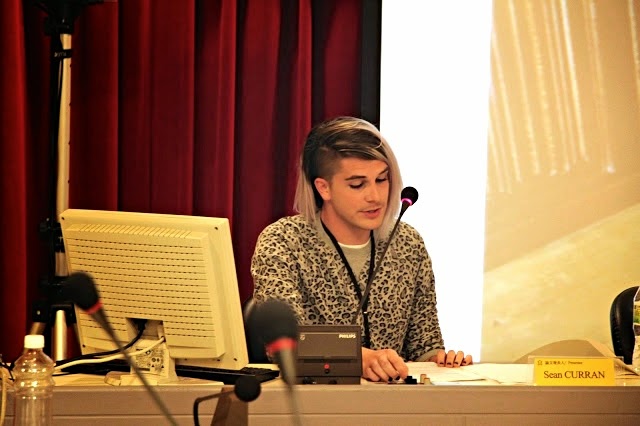
I attended the 'Museums and Education in the 21st century: local and global discourses' conference at the National Taiwan Normal University in June with fellow PhD student (and artist for my Master Mistress exhibition) Judith Brocklehurst, and three academics from my department.
I won't recount the conference proceedings, but the two days were varied and rich and truly international, there were papers from Taiwan, the UK, Australia, China and more. We met some really interesting people and made some really great connections for the future.
I wanted instead to share some of the pictures I took while I was there, Judith and I stayed for a few days following the conference, and visited several heritage sites which helped to contextualise some of the issues that we had been discussing and hearing about throughout the conference.
The first site we visited was the National Palace Museum in Shilin, which holds one of the largest collections of ancient Chinese artefacts in the world. The conference organisers kindly arranged for us to have a tour from an extremely knowledgable voluntary tour guide, though due to the size of the museum we only scratched the surface in the few hours we were there (also we were treated to a delicious meal in the roof top restaurant!)
We then went to the Shihsanhang Museum of Archaeology, which, aside from being one of the most interesting museum buildings I've ever seen, seemed quite incoherent in terms of the odd dialogue happening between the jarring architecture and the rather archaic nature of the exhibits within it, including rather dated dioramas and model human architects aplenty.
The next day we visited the Lin Family Mansions and Gardens. I was really keen to see what historic houses in Taiwan looked like, and how they were as a visitor experience in comparison to UK historic houses. Unfortunately the tours were only conducted in Mandarin, and Judith and I felt our language skills weren't up to enough to join them, so we mainly spent time in the gardens. The rain was torrential, but this is one of the most beautiful places I've ever been to. It is one of the most complete surviving examples of traditional Chinese garden architecture and was structured around a series of ponds.
It was beautifully crafted to accommodate the wet weather, as it was almost entirely under cover, you could walk almost all the way around it without getting wet. It was also great so see groups of teenagers using the space to just hang out, I can't imagine a group of teens here, spending their free times just chatting in a national trust garden (partially because they aren't free!). A really interesting thing was the interpretation sign at the front which was in Mandarin and English, the English one gave a brief overview of the entire history of the house (it was occupied by squatters at one point, a surprising parallel with Sutton House!), with the only unaccounted period being the 50 years (until 1945) that Taiwan was under Japanese rule, a really interesting omission in a country that seems to wear the Japanese legacy of architecture, food and subcultures quite proudly. The gardens had been built around, so closely that there were rather run down high rises with mesh screens in front of them looking over the gardens. A really striking juxtaposition.

As an aside, we visited the gay area of Ximen, which was one of the only places that we encountered where there seemed to be any sort of bar culture that resembles our own, the stairway leading to a walkway around the top of the bars had its walls painted in rainbow striped and had a small photographic exhibition called Rainbow People.
There was a theatre next to the gay bars called the Red House Theatre, most of which operated as an artists market, and there was a small exhibition about the history of the building and the area, including a small exhibit of material relating to queer culture. I gather Taipei is quite Westernised in terms of its approach to visibility of queerness, which was lovely to see.
Our next trip was to Tamsui, which was at the end of one of the MRT lines (the metro system). It was one of my favourite days, even though we were still in Taipei, because it was at the mouth of a river and felt quite seasidey, the climate was completely different, the skies were blue, and the humidity was slightly more bearable because of the sea breeze.
We visited Tamsui Historical Museum, a former British Consular residence, which felt very much like an English country house (apart from the humidity), and oddly enough they had an exhibition there called 'Everlasting vision of William Morris', including various Morris pieces of furniture, the focus was on the preservation of historic buildings, and the origins of SPAB (Society for the Protection of Ancient Buildings). It was very unusual to see an exhibition in a historic house that was about the process of protecting historic houses, a really refreshing approach.
Next day we went to the Taipei Fine Art Museum, which had a very Tate Modern feel about it, but more coherent, and MUCH cheaper. We went to three exhibitions, but my favourite was a retrospective of the work of Dean-E Mei, who I was unfamiliar with before. Due to the time he lived, studied and practiced in New York, Dean-E Mei has a really interesting perspective on Taiwan, and his own national identity.
Right by the Fine Art Museum was the Taipei Story House, which was a really weird faux Tudor building built in the early 1900s. The house was used in a really interesting way, as apart from the first room, which gave a brief history of the building, the rest of the house was devoted to temporary exhibitions, telling a single story, in this case, it was the history of fortune telling. There were walls filled with Tarot cards, and various ways for the visitor to learn various elements of fortune telling, a woman helped us to tell our fortunes using numerology, by drawing out three numbers from a little velvet bag, my fortune was something along the lines of 'pretty face' and Judith's elicited shrieks of horror and fear from the woman, who had to ask someone else to try and translate it sensitively...
Then we headed to the Lin An Tai Historical House and Museum, which was odd as it claimed to be the oldest historic house in Taipei, but had been deconstructed and relocated in order to make room for a new road. We only had half an hour or so to see the house as it was about to close, but it was great to see the interior of a traditional Chinese house as we hadn't seen the inside of the Lin Family Mansion.
On our final full day, we visited the Chiang Kai-Shek Memorial Hall, and were just in time for the changing of the guards, which was a gloriously camp choreographed affair, because the building was so open, there was no air condition, it was so insanely hot in there as we were watching the guards change I could feel sweat running down my legs, the guards must have been suffocating. There was a very nice moment where a security man mopped the sweat from their brows and the back of their necks, a weirdly tender moment between men with massive guns.
It was such a great trip, an honour to be able to talk about my Sutton House exhibition to an international audience and meet so many people doing really great work in museums around the globe. It was also a brilliant opportunity to see so many amazing sights (and sites) in a country that otherwise hadn't really been on my radar of places to visit.
I also made a little video of some of the moments I captured while I was there, including the changing of the guards at the Chiang Kai-Shek Memorial Hall, and the torrential rain at the Lin Family Mansion and Gardens:
Taipei from Sean Curran on Vimeo.
I attended the 'Museums and Education in the 21st century: local and global discourses' conference at the National Taiwan Normal University in June with fellow PhD student (and artist for my Master Mistress exhibition) Judith Brocklehurst, and three academics from my department.
I won't recount the conference proceedings, but the two days were varied and rich and truly international, there were papers from Taiwan, the UK, Australia, China and more. We met some really interesting people and made some really great connections for the future.
I wanted instead to share some of the pictures I took while I was there, Judith and I stayed for a few days following the conference, and visited several heritage sites which helped to contextualise some of the issues that we had been discussing and hearing about throughout the conference.
The first site we visited was the National Palace Museum in Shilin, which holds one of the largest collections of ancient Chinese artefacts in the world. The conference organisers kindly arranged for us to have a tour from an extremely knowledgable voluntary tour guide, though due to the size of the museum we only scratched the surface in the few hours we were there (also we were treated to a delicious meal in the roof top restaurant!)
We then went to the Shihsanhang Museum of Archaeology, which, aside from being one of the most interesting museum buildings I've ever seen, seemed quite incoherent in terms of the odd dialogue happening between the jarring architecture and the rather archaic nature of the exhibits within it, including rather dated dioramas and model human architects aplenty.
The next day we visited the Lin Family Mansions and Gardens. I was really keen to see what historic houses in Taiwan looked like, and how they were as a visitor experience in comparison to UK historic houses. Unfortunately the tours were only conducted in Mandarin, and Judith and I felt our language skills weren't up to enough to join them, so we mainly spent time in the gardens. The rain was torrential, but this is one of the most beautiful places I've ever been to. It is one of the most complete surviving examples of traditional Chinese garden architecture and was structured around a series of ponds.
It was beautifully crafted to accommodate the wet weather, as it was almost entirely under cover, you could walk almost all the way around it without getting wet. It was also great so see groups of teenagers using the space to just hang out, I can't imagine a group of teens here, spending their free times just chatting in a national trust garden (partially because they aren't free!). A really interesting thing was the interpretation sign at the front which was in Mandarin and English, the English one gave a brief overview of the entire history of the house (it was occupied by squatters at one point, a surprising parallel with Sutton House!), with the only unaccounted period being the 50 years (until 1945) that Taiwan was under Japanese rule, a really interesting omission in a country that seems to wear the Japanese legacy of architecture, food and subcultures quite proudly. The gardens had been built around, so closely that there were rather run down high rises with mesh screens in front of them looking over the gardens. A really striking juxtaposition.

As an aside, we visited the gay area of Ximen, which was one of the only places that we encountered where there seemed to be any sort of bar culture that resembles our own, the stairway leading to a walkway around the top of the bars had its walls painted in rainbow striped and had a small photographic exhibition called Rainbow People.
There was a theatre next to the gay bars called the Red House Theatre, most of which operated as an artists market, and there was a small exhibition about the history of the building and the area, including a small exhibit of material relating to queer culture. I gather Taipei is quite Westernised in terms of its approach to visibility of queerness, which was lovely to see.
Our next trip was to Tamsui, which was at the end of one of the MRT lines (the metro system). It was one of my favourite days, even though we were still in Taipei, because it was at the mouth of a river and felt quite seasidey, the climate was completely different, the skies were blue, and the humidity was slightly more bearable because of the sea breeze.
We visited Tamsui Historical Museum, a former British Consular residence, which felt very much like an English country house (apart from the humidity), and oddly enough they had an exhibition there called 'Everlasting vision of William Morris', including various Morris pieces of furniture, the focus was on the preservation of historic buildings, and the origins of SPAB (Society for the Protection of Ancient Buildings). It was very unusual to see an exhibition in a historic house that was about the process of protecting historic houses, a really refreshing approach.
Next day we went to the Taipei Fine Art Museum, which had a very Tate Modern feel about it, but more coherent, and MUCH cheaper. We went to three exhibitions, but my favourite was a retrospective of the work of Dean-E Mei, who I was unfamiliar with before. Due to the time he lived, studied and practiced in New York, Dean-E Mei has a really interesting perspective on Taiwan, and his own national identity.
Right by the Fine Art Museum was the Taipei Story House, which was a really weird faux Tudor building built in the early 1900s. The house was used in a really interesting way, as apart from the first room, which gave a brief history of the building, the rest of the house was devoted to temporary exhibitions, telling a single story, in this case, it was the history of fortune telling. There were walls filled with Tarot cards, and various ways for the visitor to learn various elements of fortune telling, a woman helped us to tell our fortunes using numerology, by drawing out three numbers from a little velvet bag, my fortune was something along the lines of 'pretty face' and Judith's elicited shrieks of horror and fear from the woman, who had to ask someone else to try and translate it sensitively...
Then we headed to the Lin An Tai Historical House and Museum, which was odd as it claimed to be the oldest historic house in Taipei, but had been deconstructed and relocated in order to make room for a new road. We only had half an hour or so to see the house as it was about to close, but it was great to see the interior of a traditional Chinese house as we hadn't seen the inside of the Lin Family Mansion.
On our final full day, we visited the Chiang Kai-Shek Memorial Hall, and were just in time for the changing of the guards, which was a gloriously camp choreographed affair, because the building was so open, there was no air condition, it was so insanely hot in there as we were watching the guards change I could feel sweat running down my legs, the guards must have been suffocating. There was a very nice moment where a security man mopped the sweat from their brows and the back of their necks, a weirdly tender moment between men with massive guns.
It was such a great trip, an honour to be able to talk about my Sutton House exhibition to an international audience and meet so many people doing really great work in museums around the globe. It was also a brilliant opportunity to see so many amazing sights (and sites) in a country that otherwise hadn't really been on my radar of places to visit.
I also made a little video of some of the moments I captured while I was there, including the changing of the guards at the Chiang Kai-Shek Memorial Hall, and the torrential rain at the Lin Family Mansion and Gardens:
Taipei from Sean Curran on Vimeo.
Subscribe to:
Comments (Atom)